Post #3 – Women’s Memoirs, Writing and Healing – Kendra Bonnett and Matilda Butler
Personally Finding Healing through Memoir Writing and Journaling
Recently, Kendra Bonnett and I added the category of Writing and Healing to our Women’s Memoirs website. We have been planning this addition for more than a year. During those twelve months, we’ve been contacted by a number of women who mention that healing is an unexpected benefit of memoir writing. Some of our blogs in this series will look at the research behind writing and healing. Some will emphasize how to get the most healing out of your writing. Some will be a series of posts from women who feel that writing has been personally beneficial to them in healing relationships, the self, and physical problems.
We invite you to send us your story. Just email between 200-600 words (or longer if you contact us first) to: Matilda (at) WomensMemoirs (dot) com. We are interested in publishing your thoughts on writing and healing on this website — either with your name or anonymously, your choice. Today’s story comes from Jennifer Hazard.
MY JOURNAL, MY SANCTUARY
Jennifer Hazard
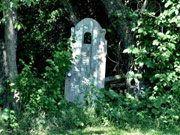 Like a Secret Garden
My journey with writing as healing began before I fully understood the profound effect it would come to have on my life. I began keeping a journal as a child, maybe about eight years old. It was a tumultuous time in my life, my parents had just divorced, the country was in political uproar and conflict and I was just beginning to realize that my family wasn’t quite like many other families. I had feelings inside me that I didn’t have the developmental capacity to understand or explain, but journaling about my life events and my observations of the world around me gave life those enigmatic feelings. My journal became a sanctuary for the confused and frightened little girl I kept hidden inside. Like a Secret Garden, it was hidden, safe and it was mine.
I continued journaling throughout my life. In my years of teen angst, writing was an outlet for the anger, insecurity and frustration I tried so desperately to repress. As the oldest child of a blended family I had a lot of responsibility to my younger siblings, including protecting them from my own feelings of resentment at the role I had been unwillingly cast in as “Caretaker”.
As I became a young woman and left home, as so many Caretakers do I became involved with and married an emotionally unstable, often abusive man. I soon became a mother and my job now was to protect my daughter from the realities of our living situation. We were very poor; sometimes all I had was a 39 cent spiral notebook from Walgreens and the pens I lifted from my waitressing job. Still I had my sanctuary, and as an adult I was developing the insight to witness my own contradictions and rationalizations that kept me chained to an unhappy relationship. When denial ran high I’d stop journaling for a while. It makes sense, if writing is healing and you are too afraid to heal because it means facing a painful reality, then you will avoid your journal much as you avoid your family, friends and anything else that might disrupt the status quo.
When the time came that I knew I had to get out, re-reading my old journals exposed the insanity I had been deluding myself with and helped me to gather the strength to leave.
The long term effects of the years of abuse snuck up on me over the years, and my number one coping mechanism, alcohol, now took the place of my ex-husband in distorting and controlling my life. Once again when the need for change became inevitable, it was seeing my drunken irrational self in my journals that helped me to realize what needed to be done.
 The Secret Garden Opens Its Door to Understanding
When I checked into treatment, I was given a notebook by my counselor on that first day. She told me that the first step of treatment was to write my autobiography throughout the first month of my stay. All of the residents of the program were required to do so and at the end of the first month entire sessions were devoted to one of us reading our autobiography to the group. Two things stand out most significantly about this process.
First, at about the halfway point in my autobiography I experienced one of those a-ha moments…”no wonder I drink to escape”. Seeing my life events and my reaction (or lack of reaction) to them all in one timeline was illuminating to say the least. My thought processes throughout my life, had compartmentalized events as separate entities, flukes, moments of “bad luck” which prevented me from recognizing the repeating patterns that kept me stuck shackled to a man, a bottle, a lifestyle that didn’t feel authentic.
Second, sharing and hearing other women’s stories facilitated a bonding and empathy that I have rarely experienced before or since. As you can imagine 14 women living in the same house is not without conflict, personality clashes and triangulation. After hearing each other’s stories, we developed a respect and empathy (if not necessarily a liking) for each other. That was over 10 years ago and I have lost contact with most of those women, some I don’t even remember their names.
But I do remember their stories.