Post #24 – Women’s Memoirs, Writing and Healing – Kendra Bonnett and Matilda Butler
Double Benefits from Memoir
 Most Women’s Memoirs readers have seen piles of articles about the benefits of journaling, writing memoir and other forms of expressive writing. You’ve probably also read reminders to write for yourself first before considering whether, how, and how much to share. After all, you are the primary one to reap the benefits such as greater sense of clarity, meaning and joy from your efforts, so your needs and interests should come first.
Indeed, you do not need to share a single word to reap huge dividends from writing. Many people are content to write for the “readership of one.” Some lack motivation to polish and print. Others fret about writing skills. Some fear consequences of disclosure. Others don’t think their lives would be interesting or meaningful to others. In contrast, some seek personal validation through publication. On some level they believe that if a publisher picks up their story, their life will be deemed worthy and their suffering vindicated.
While the acclaim and satisfaction of a published book is huge, here’s another slant on the value of publication that goes beyond ego: your story, however humble, may be just what someone else needs to slip a crucial piece into place in their life puzzle. You may help them break through to their “next level” of insight and healing. You’ll probably never know who these people are, or what stunning insight you inspired, but if you think about the memoirs you’ve read and the effect they’ve had on you, you may have a clue how this works. Ideally the experience of writing will benefit the author while reading benefits the reader. Three recent memoirs I’ve read come to mind as examples of benefits for readers.
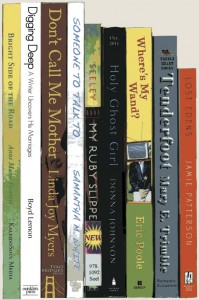
My Ruby Slippers by Tracy Seeley inspires on several levels. While healing physically and emotionally from the double-hitter of abandonment by a long-term lover the day after her breast cancer diagnosis, Seeley discovers unsuspected roots in the humble state of Kansas. In one slender volume she educates readers about the wonders of this oft-jeered state while weaving loose ends of her life into a braid neatly bound with forgiveness for her wayward father. Like Lemon, she uses a multi-layered approach to appeal to readers on several levels.
In Digging Deep, Boyd Lemon dives to the bottom of his psyche to assess his role in the disintegration of three successive marriages. He pulls no punches with himself, and though candid, treats the wives with compassion. From my woman’s perspective, I found his insights — they generalize well to men who came of age in the fifties and sixties and shed light on the role women of that era often played in perpetuating what he refers to as “the contract between the sexes.” Both men and women can benefit from his keen insights, to enhance existing relationships or mend broken hearts resulting from broken vows. His innovative structure of narrating the process of writing as a vehicle for exploring the past may provide inspiration to memoirists struggling to find their own story form.
Jamie Patterson goes to great lengths in Lost Edens to detail her obsessive thinking during the few weeks her marriage was in its death throes. Patterson ultimately came to realize that although the marriage was too broken to fix, she could, and did, fix herself. Surely the process of writing the book helped congeal her insights, but perhaps more importantly, the book offers hope to those who may be stuck in a similar situation. More likely it will help those past a similar break-up make sense of their former lives. It also offers hope and patience to despairing friends and families who need help in remembering that people can only hear and heed helpful advice when the time is right.
Any of these three authors could have derived most or all of the personal benefit from their writing if nobody else had ever seen it. I’m glad they chose to publish. I enjoyed the stories and derived many insights from each. I encourage everyone to read even more than they write to continue to grow in each mode, and to share writing for the benefit of all concerned.

 If you like this week’s article from Sharon Lippincott, you may also want to read:
Writing and Healing: Staying Safe in a Room Full of Elephants
Writing and Healing: Three Tips for Memoir Writers and Journalers
Writing and Healing: Writing with Feeling Feels Good
memoir writing
memoir
writing
journaling
writing and healing