Post #2 – Women’s Memoirs, Rosie the Riveter – Matilda Butler and Kendra Bonnett
NOTE: Our one-day sale is over. However, we hope you’ll view our fun video, showing lots of modern-day Rosie the Riveter poses.
Rosie the Riveter’s Bandana: One-Day Sale
 Last Friday, we welcomed Rosie the Riveter and her daughters, women born during World War II, to our website. At that time we announced there’d be a special One-Day Only Sale. And here it is.

Women young, old and in between are Rocking the Dots! That’s because they love Rosie the Riveter…she’s the most recognizable symbol of the strong, empowered woman we all admire. Rosie’s most enduring icon is her red-and-white, polka dot bandana. But you can’t buy them any place…UNTIL NOW.
As you probably know, Kendra Bonnett and I are the authors of the collective memoir Rosie’s Daughters: The “First Woman To” Generation Tells Its Story, and when we wanted red-and-white, polka dot bandanas to promote our book, we had to design our own and have them specially manufactured.
Now you too can own our
ORIGINAL ROSIE THE RIVETER LEGACY BANDANA.
This is our Limited Edition III (I and II sold out quickly), and it’s VERY special. Our new bandana is a generous (HUGE) 27 x 27 inches so you can tie it just like Rosie the Riveter did. You also get more polka dots–large ones just like Rosie wore–and in a random pattern. We studied her bandana carefully to make sure we were offering you an authentic look. And finally, we’re pleased to say it is 100% MADE IN THE USA.
 And the Original Rosie the Riveter Legacy Bandana is manufactured only for us and bears our unique Rosie the Riveter logo with Rosie in silhouette. It’s 50/50 cotton-poly AND WASHES BEAUTIFULLY.
Share Rosie the Riveter’s legacy by wearing and giving this Made in the USA bandana–designed by us–to represent the combined legacy of Rosie and Rosie’s Daughters. Her motto is “We Can Do It!” Let’s work together to pass on that legacy. Wear the bandana yourself. Give one to a daughter, a granddaughter, or share with your friends.
We have always felt our bandana makes a statement and serves as the perfect symbol of women’s empowerment. Our customers agree, and many have taken to expressing their pride by wearing our bandanas at their weddings, for special events and celebrations, at team sporting events…and even dressing up as Rosie the Riveter for Halloween.
If you didn’t look at our video above, you might want to now. We’ve shown some of the great photos our customers have sent us. Our red-and-white, polka dot bandana IS the perfect POWER accessory to top off their look. SHIPPED FROM SMOKE-FREE FACILITY.
Usual price is $12 (plus shipping).
1-DAY SALE PRICE ONLY: $8 (plus shipping).
Be sure to make your purchase before midnight tonight — August 31, 2010
Order as many as you want at this great price. They are perfect Christmas presents, stocking stuffers, friendship gifts, and just plain fun to wear. At $8, Rosie the Riveter’s bandana lets you make the statement to friends and family that you respect their strength and courage and “Can Do It” attitude.
What’s So Special Today that Warrants our First Ever Bandana Sale?
We’re celebrating the 90th year of the ratification of Anthony’s Amendment. Huh? All right. We call it the 19th Amendment that recognized women’s right to vote. But 90 years ago, it was commonly called Anthony’s Amendment since Susan B. was the significant face and name behind championing the vote for women.
Abigail Adams to Rosie the Riveter
I’d like to quickly trace the link to Rosie the Riveter from Harry T. Burns’ mother, the 66th Congress, President Wilson, World War I women workers, Carrie Chapman Catt, Susan B. Anthony, and Abigail Adams.
Let’s start with Abigail Adams and work our way toward Rosie. When the American colonies decided to break with England, Abigail Adams, knowing there would be new laws, famously wrote to her husband:
… I desire you would Remember the Ladies, and be more generous and favourable to them than your ancestors. Do not put such unlimited power into the hands of the Husbands. Remember all Men would be tyrants if they could. If perticuliar care and attention is not paid to the Laidies we are determined to foment a Rebelion, and will not hold ourselves bound by any Laws in which we have no voice, or Representation.
–Abigail Adams, letter to John Adams, March 31, 1776
Of course, as we all know, women had no voice or representation in spite of Abigail Adams’ letter. Fast forward 75 years to May 1851 when Susan B. Anthony and Elizabeth Cady Stanton meet. Soon they found themselves working together, fostering the woman’s suffrage movement. They continued their efforts for 50 years, yet neither lived long enough to be able to vote. Anthony died 14 years before suffrage was granted to women. When Elizabeth Cady Stanton died, Susan B. Anthony remarked, “She forged the thunderbolts and I fired them.” They were an effective team.
Carrie Chapman Catt comes into our story twice. She was a field organizer with Susan B. Anthony in the National American Woman Suffrage Association (NAWSA). Susan B. specifically chose Catt as her replacement to head the organization. Catt was president twice from 1900-1904 and then again during the crucial years of 1915-1920.
And while organizing and campaigning and lobbying state legislatures was critical to eventually securing women’s right to vote, World War I played its own role. Many women went to work in the 1914-1918 period of WWI. Although not nearly as well known as the Rosie the Riveter generation, these women made sacrifices, worked hard, and frequently replaced men who went to war. At the end of the war, women turned to President Wilson saying that they were important enough to work for their nation yet were not allowed to vote and have a say in the affairs of their country.
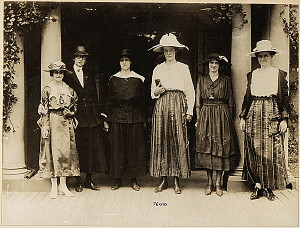
WWI munition workers, seeking the vote, visited Wilson
We have made partners of the women in this war. Shall we admit them only to a partnership of suffering and sacrifice and toll and not to a partnership of right?
So May 21 1919, the House of the 66th Congress finally passed the proposed constitutional amendment and on June 4, the Senate endorsed it. I say finally because this amendment had been introduced in every session of Congress for the 41 years between 1878 and 1919.
The next step in this journey to suffrage was ratification of the amendment. By August of 1920, 35 states had ratified the 19th Amendment and only one more state legislature needed to vote in favor of it. The Tennessee General Assembly became critical because all the southern states had opposed giving women the right to vote. One legislator, and even more importantly, one legislator’s mother changed the outcome of the Tennessee vote.
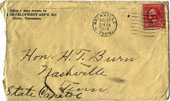 Harry T. Burn was anti-suffrage. He wore, as was the custom, a red rose in his label showing that he was against suffrage for women. The legislature was tied 48 to 48 and Burn’s vote would be the deciding one. Just before he went into vote, he received a letter from his mother. She wrote:
Dear Son: Hurrah and vote for suffrage! Don’t keep them in doubt! I notice some of the speeches against. They were bitter. I have been watching to see how you stood, but have not noticed anything yet. Don’t forget to be a good boy and help Mrs. Catt put the “rat” in ratification. Your Mother
On the advice of his mother, Harry T. Burn voted in favor of the proposed 19th Amendment. You notice the reference to Mrs. Catt. Her sole reason for taking the presidency of the NAWSA in 1915-1920 was to work to secure the right to vote for women. Once it passed in August 1920 and was certified later that month, Carrie Chapman Catt left NAWSA. As a footnote to her story, Catt founded the League of Women Voters in 1920, a vibrant organization even today, 90 years later.
We hope you’ve enjoyed this story of the 19th Amendment and the courageous women who worked to secure the right to vote for American women. And the link to Rosie the Riveter? The strength and courage of the millions of women who went to work during World War II is a wonderful testament to all the women who worked to secure them a “partnership of right.” The discrimination the Rosie’s faced in the workplace is well documented. And yet they showed they could do any job they were asked to do. Their “Can Do” attitude is as vital today as it was during WWII.
If you’d like to take advantage of our 1-Day Rosie the Riveter Bandana Sale just click on the link below and pay only $8 per bandana instead of the usual $12.