Post #6 – Women’s Memoirs, Writing Prompts – Kendra Bonnett and Matilda Butler
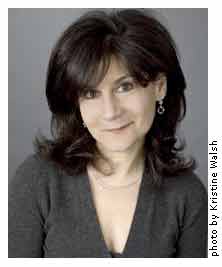 I’m always pleased when we get to introduce our readers to a new story. Personally, I think it’s doubly fun when that story also represents an author’s first book. Such is the case with Alyse Myers and her new memoir Who Do You Think You Are? In many ways, this is not an easy book to read because the story is a tough one. Sadly it’s also not an uncommon story, as Alyse has discovered through subsequent conversations with other women who grew up amidst unhappiness, cruelty and, perhaps most difficult of all, uncertainty.
I think you’ll find Who Do You Think You Are? a compelling read. If you are working on a particularly difficult writing project of your own, you’ll find Alyse to be a good teacher. She shows how to handle the personal and messy with taste and insight, even inspiration.
So please join me in welcoming Alyse Myers to Women’s Memoirs. Read her guest blog below. Then take some time to write a Comment. Actually, write a question for Alyse because this is your opportunity to interview a published author. Matilda and I will collect your comments and use them as part of an interview with the author…coming up on July 16th (details below). We’ll even name you when we ask the question in your behalf.
Finally, because we have so many aspiring writers on this site, Alyse has provided a writing prompt. We don’t want you just hanging around here reading what others have done. We want you practicing your craft. So please read the blog, post a Comment, then get to writing. And then join us on July 16 live for an interview with Alyse Myers.
Date/Time: July 16, 2009/8 p.m. EDT (5 p.m. Pacific)
Phone Number: 712-432-0600 (access code: 998458#)
I’m always asked why I wrote this book—and why now.
When I was nine years old, my father gave me a red diary (and if you’ve read my book you’ll understand the significance of that diary). He told me that whenever I was unhappy, to “write it down.” From that, I found that writing was an escape—especially when I was too young to actually go anywhere. Writing in my diary gave me pleasure that I wasn’t getting in my real life. Much of my unhappiness came from my relationship with my mother—a relationship that in so many ways defined who I am today.
I always wanted to be a writer—and I started writing my book in my head when I was 16 years old. I would file away chapters in some part of my brain, knowing that one day I would put those thoughts on paper. I wanted to write about things I had never told anyone. Things I had never shared before. Not with my husband. Or my daughter. Or my closest friends. I knew that one day I would be ready to tell my story.
Well, that day came a few years ago. I was ready. I decided: if not now, when?
But I didn’t know how to begin. So I took a class. In memoir writing. And it changed my life.
The first assignment was to write about a day that caused pleasure or pain. I knew that no one would want to read about pleasure. So I thought about pain—and the first thing that came to mind was going to my father’s funeral with my mother when I was 11 years old. One of the loneliest days of my life, and a day I realized I hadn’t thought about until I was given that assignment.
I used the next assignment as an opportunity to write about another event in my childhood. And then another. By the end of that class, I had five short stories—two pages each. They became the basis for my memoir. In fact, all of those stories found their way into my book.
In my memoir, Who Do You Think You Are? I admit I didn’t like my mother or love her. In fact, that’s how I began my book.
I happen to be a very private person—despite the fact that I wrote a memoir, and quite a revealing one at that. For some reason, I’ve always been able to separate the unhappy child growing up in a housing project in Queens, N.Y., from the person I am now. Call me crazy, or perhaps a great compartmentalizer, but I always saw my past as just that: the past.
Writing this book allowed me not only to tell my story, but my readers have told me it gave them permission to tell their own stories. To admit that they too didn’t have a good relationship with their mothers. So many of my readers told me this was something they never felt they could admit to anyone—including themselves. Until now.
I also heard from people who had good relationships with their mothers. And they told me my book made them appreciate their mothers even more. And that meant so much to me.
I hope my story will encourage you to tell yours. To “write it down.” And when you do, I’d love to read it.
WRITING PROMPT
This is the assignment that started it all for me, so I’ll give it to you:
Write about a day that caused pleasure or pain. Your story should be two pages, double-spaced. No more. Writing short vs. writing long is harder than you think, as you’ll see. But this exercise will help you edit out the things that don’t really have anything to do with your story. And it will force you to focus on what’s really important—to only tell what really matters.
The first line is key. Think about how best to draw in your reader so that she wants to go to the next sentence and then the next. Only write about one thing, one event. You only have two pages!